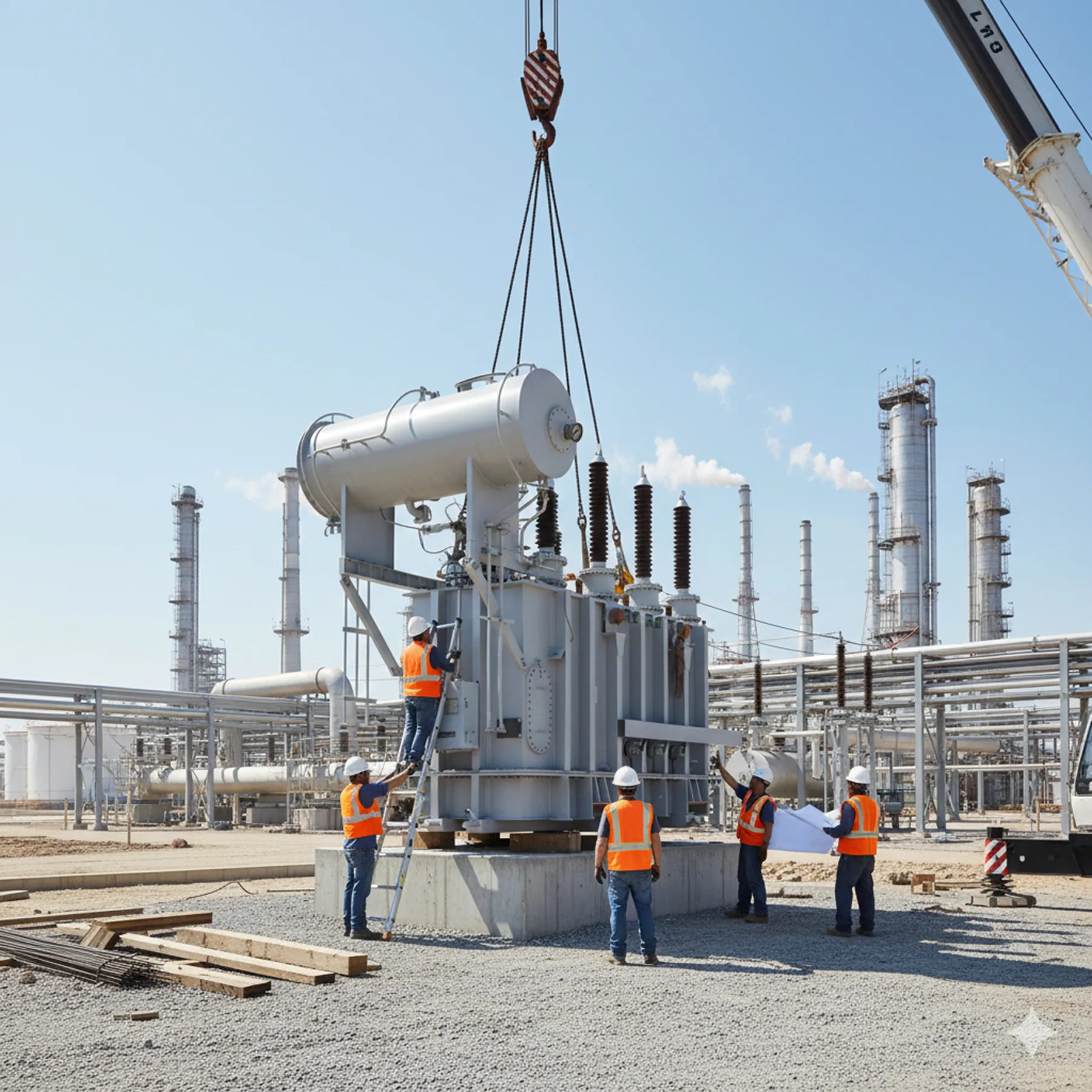
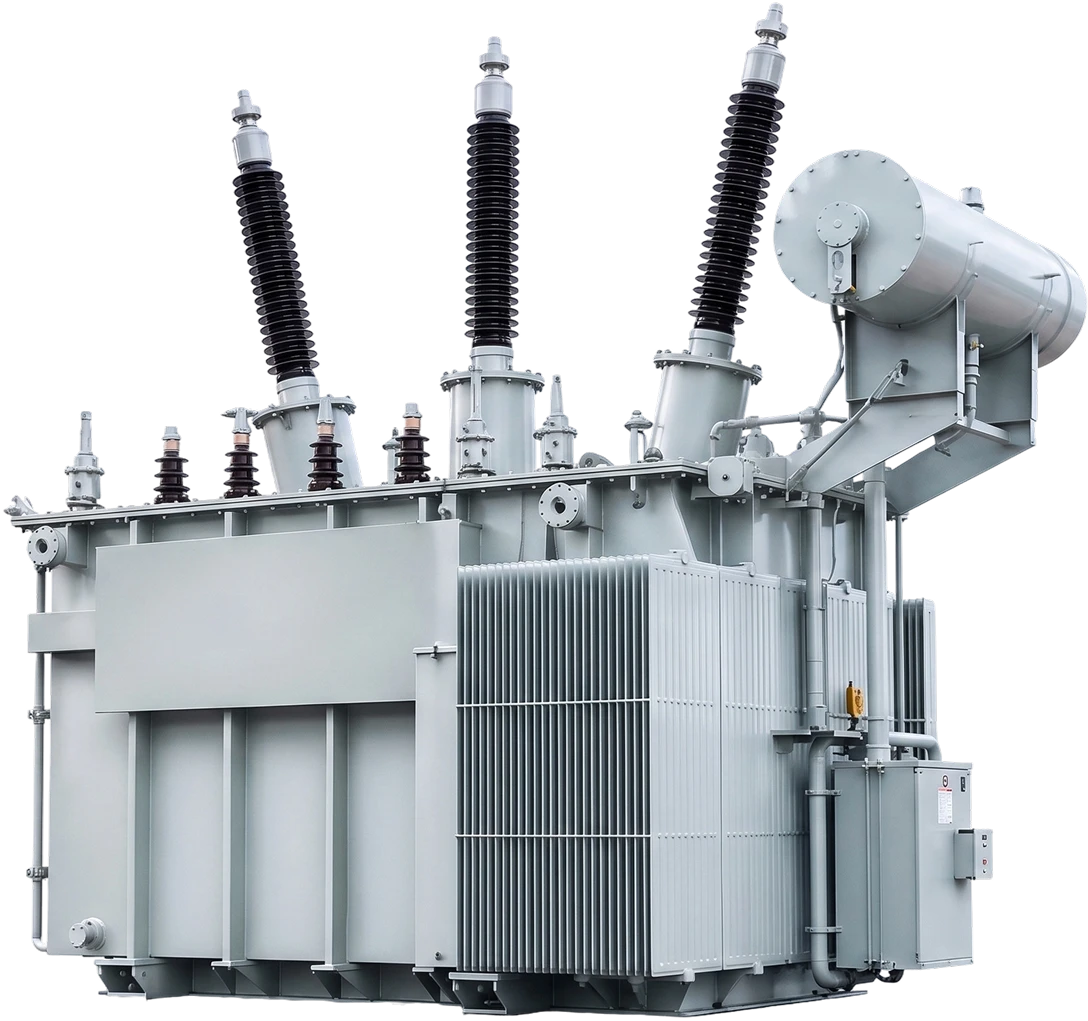
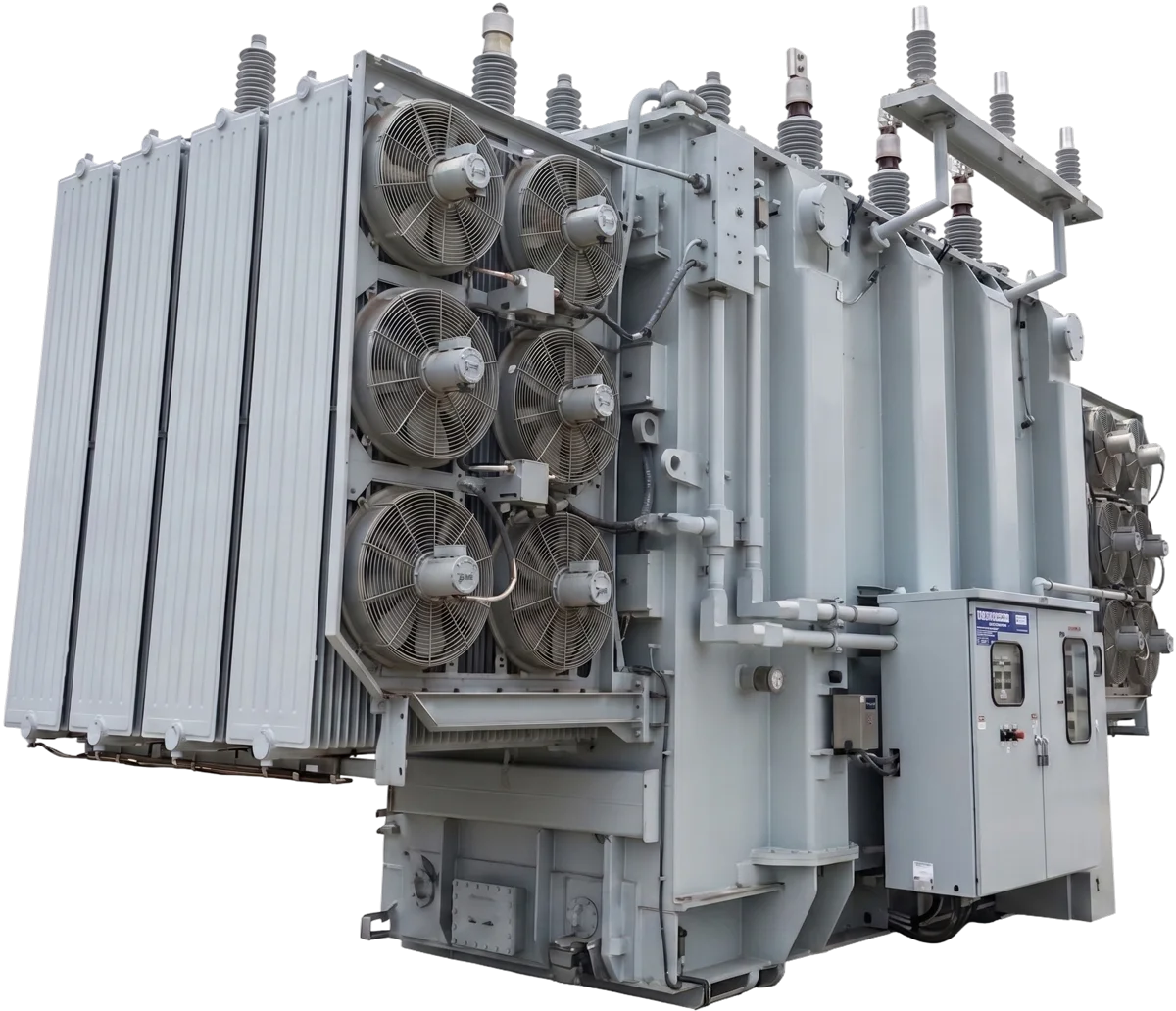
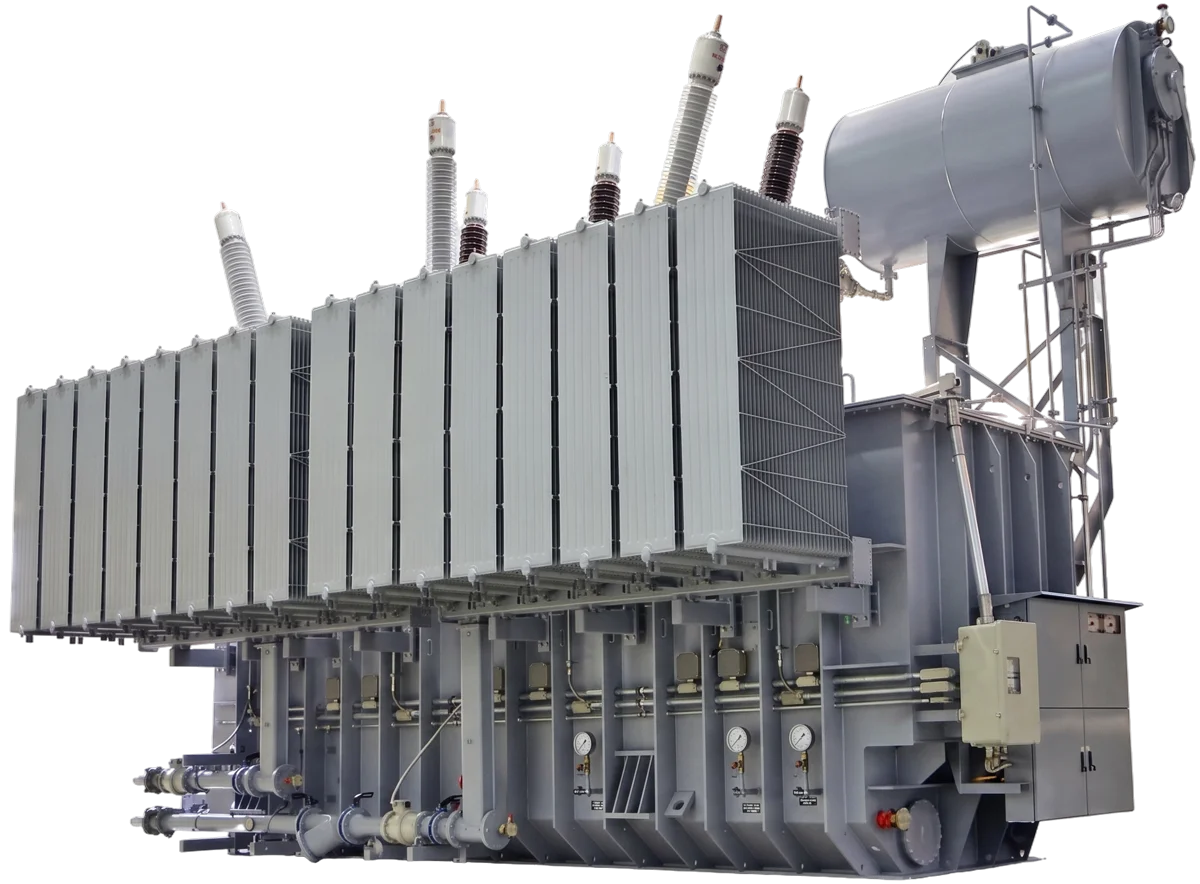
Custom-engineered power capacity for hyperscale, colocation, and edge facilities — designed and built in America.
Engineering Experience
Maximum Unit Capacity
U.S. Manufactured
For two decades, sourcing a substation transformer was routine. It no longer is. Three forces are colliding: AI training clusters have pushed data center power profiles from tens of megawatts to gigawatt-scale campuses. The raw materials behind every transformer — grain-oriented electrical steel among them — come from a small number of mills worldwide, stretching lead times industry-wide. And a large share of the grid's transformer fleet is aging into replacement, competing for the same limited capacity as new data center build-out.
The result is a procurement queue where a hyperscaler and a utility replacing a decades-old unit are bidding for the same production slot. New facilities are now planned five to seven years out, and substation transformers, autotransformers, and generator step-up units sit at the top of every long-lead procurement list.
Each LIMIK product line serves a specific role in the data center power architecture — from the utility interconnection down through the campus, from behind-the-meter generation, and across the full facility lifecycle.
Every unit is designed for continuous, full-load operation with conservative thermal margins and rigorous quality control. Design targets prioritize high mean time between failures (MTBF) over the unit's operating life, and hot-spot temperatures are calculated with margin rather than run to the limit of the insulation class.
A transformer sized to run at its ceiling has no headroom when ambient conditions shift or load steps up unexpectedly. A transformer with designed-in margin absorbs both without aging faster than its rated life.
That distinction is what separates a unit that reaches thirty years from one that becomes an unplanned outage in year twelve.
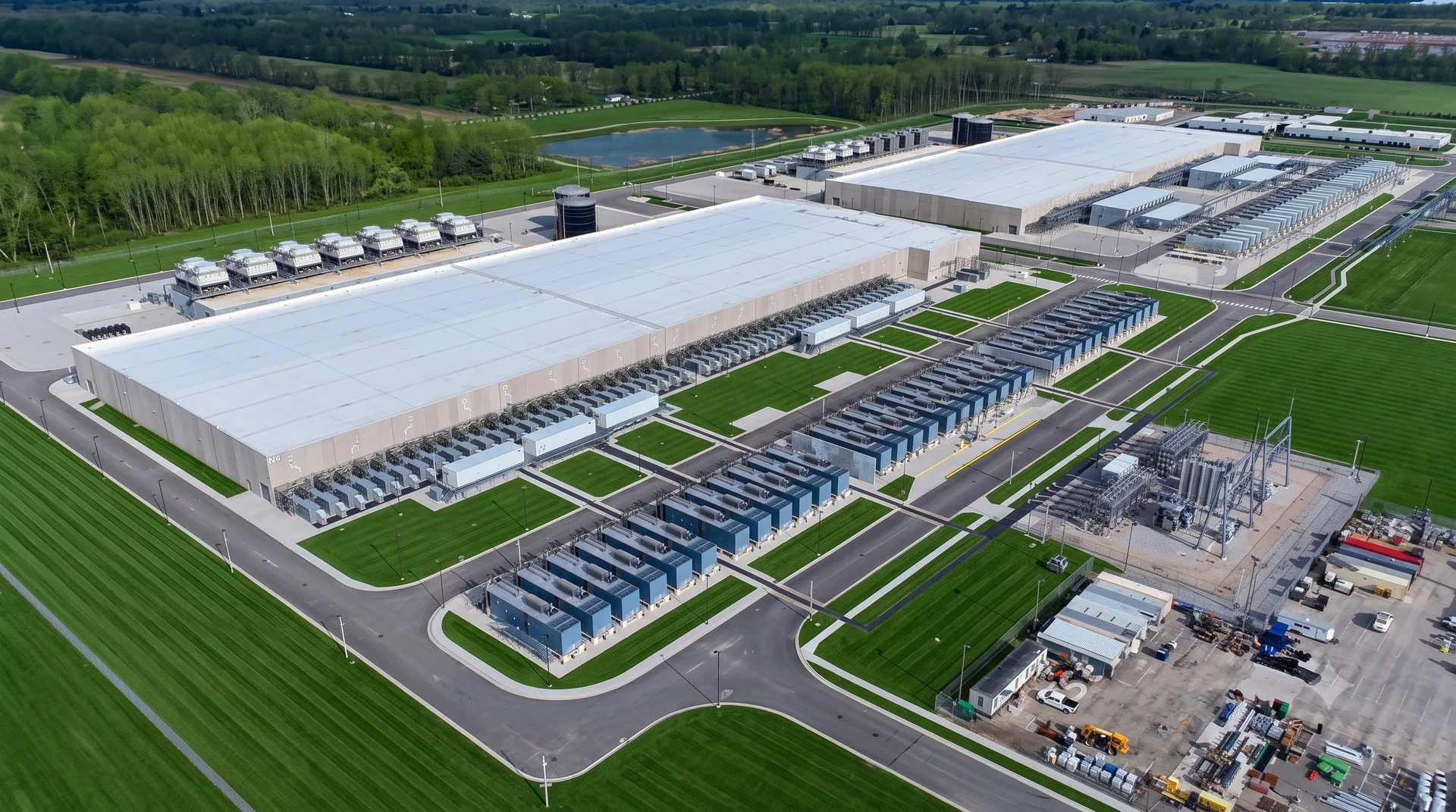
Specifying a data center transformer is a matching exercise: matching the unit to the site's load profile, layout, and growth plan. Below is the short list our engineering team walks through with every project.
Present load, planned expansion, and the timeline over which you expect to phase in capacity. Under-sizing forces early retirement. Over-sizing wastes capital and drives up losses at partial load.
Primary matched to the utility feed voltage (typical utility interconnections: 115 kV, 138 kV, 230 kV, 345 kV, 500 kV). Secondary matched to your medium-voltage distribution — 34.5 kV and 13.8 kV are common in modern hyperscale designs.
ONAN, ONAF, OFAF, ODAF — each has different footprint, noise, maintenance, and forced-cooling implications. Site constraints often decide this before nameplate rating does.
Impedance, insulation class, and thermal derating engineered against the specific harmonic spectrum your downstream load profile produces.
Bushing configuration, radiator layout, oil containment, seismic and wind ratings, transportation clearances. Data centers rarely have room to spare, and everything must fit the site the day it arrives.
LIMIK works with data center owners, developers, and EPC contractors on hyperscale, colocation, and greenfield projects. Our engineering team reviews your load profile and site constraints — before a formal RFQ.
Why LIMIK
American-made, custom-engineered, and delivered faster than the industry average. That combination is rare. That is why owners and EPCs put LIMIK in their specifications.
Request a QuoteLIMIK is a U.S.-owned power transformer manufacturer serving the American market. Buy American compliance is designed in — not certified after the fact. For federal, secure, and sovereign data center projects, that shortens qualification. For commercial hyperscale, it protects against tariff and trade risk.
Main substation transformer, autotransformer redundancy ties, and generator step-up — sourced from one manufacturer instead of three separate vendor relationships, three documentation packages, and three points of risk in your supply chain.
Your team works directly with LIMIK engineers on your specification, not through a layer of sales representatives. Voltage classes, cooling curves, and impedance targets are discussed by the people who will actually design the unit. Faster answers. Cleaner specifications.
Commissioning support, complete documentation, and technical consultation follow every unit into the field — the same engineering team that designed your transformer stands behind it after it energizes.
Answering the key questions behind AI and next-generation data centers, from power and cooling to sustainability and delivery. Understand what's driving design decisions and how facilities are built to perform at scale.
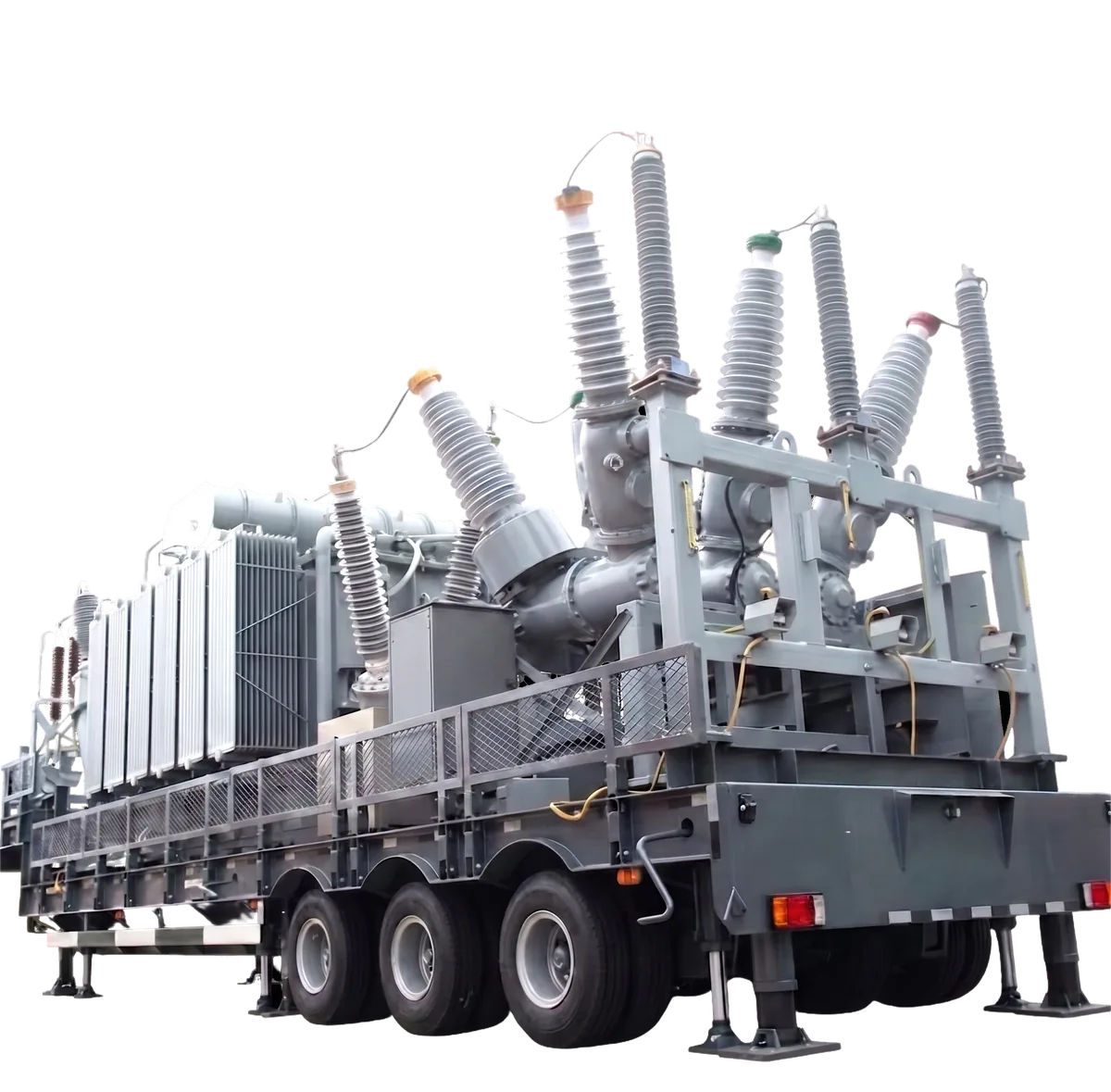
Contact UsA modern hyperscale or large colocation facility typically needs three transformer categories: (1) main substation power transformers at the utility handoff to step transmission voltage down to medium voltage, (2) autotransformers where redundant sub-transmission ties are required, and (3) generator step-up transformers for behind-the-meter on-site generation. Downstream from that — dry-type PDU transformers and isolation transformers — is a separate distribution category served by different manufacturers.
Transformers run continuously, so no-load and load losses translate directly into wasted energy and additional cooling load. Every kilowatt of transformer loss shows up twice in the PUE calculation: once as consumed energy that did not reach the IT load, and once as heat the cooling system must remove. Low-loss transformer designs contribute meaningfully to facility PUE over decades of operation.
Industry lead times for large power transformers have stretched well beyond historical norms across most manufacturers, driven by raw material constraints and surging demand — industry averages are now approaching 120 weeks. LIMIK targets a 48 to 72-week lead time for power transformers, autotransformers, and generator step-up units, confirmed with each customer at the RFQ stage against the specific unit's rating and configuration.
LIMIK is a U.S.-owned power transformer manufacturer producing in the United States. Buy American compliance matters most for federal data center procurements and for hyperscale operators managing supply-chain and tariff risk. Domestic content compliance is designed into every unit rather than certified after the fact.
Yes. Redundancy is an architectural choice made by the data center design team; LIMIK supplies the transformer, autotransformer, and GSU units that populate that architecture. Common patterns — parallel main transformers with autotransformer ties, isolated redundant feeds — are engineered on a per-project basis.
Power transformers and autotransformers up to 525 kV HV and up to 600 MVA. Generator step-up units up to 525 kV HV and 35 kV LV, up to 600 MVA. Full specifications are available on the individual product pages.
Yes. Greenfield hyperscale campuses, colocation expansions adding halls, and retrofit projects upgrading existing substations are all within LIMIK's scope. Each is engineered against the specific site conditions and existing electrical architecture.
Procurement typically begins with a Letter of Interest or Letter of Intent, followed by specification review with LIMIK engineering, then a formal purchase order once specifications are locked. This is the standard long-lead procurement pattern for large power transformers.